
Reader summary
Four points to keep
- Compare the final outer parcel with and without the retail box.
- Recalculate billable weight and check the resulting quoted price.
- Resolve QC and seller issues before discarding packaging.
- Specify protection and identify each pair in the packing instruction.
FACT-CHECK NOTE
Separate the retail box from the shipping package
The shoe box is the retail package surrounding the pair. The shipping package is the outer container and protection used for transport. Removing the former does not mean the shoes should travel without the latter. Start by identifying which material you are considering removing and what will remain between the shoes and the outside of the parcel.
A box may serve several purposes at once: keeping the pair together, protecting the shape, holding accessories and carrying identifying labels. It may also occupy avoidable space. List which of those functions matter for your order. Someone who needs intact presentation packaging has a different objective from someone buying shoes for everyday use and willing to discard the retail box.
Check whether the available packing service can perform the change you want and whether there is a fee. Do not assume that “remove box,” “flatten box” and “repack shoes” mean the same thing. Describe the desired result and ask for confirmation. A clear instruction is more useful than selecting an unfamiliar service name and hoping it matches your intention.
Finish the shoe check before removing evidence
Confirm the pair, size labels, visible condition and promised accessories before authorizing disposal. If a label is unreadable or a shoe appears different from the ordered variant, resolve that question first. The retail packaging can help connect the arrival to the order and may be relevant to the seller’s after-sales process.
Save photographs of the pair and any box label you need for your records. A photograph preserves visible information but is not a substitute for packaging when a seller requires it for a return. Check the terms applicable to your actual order before proceeding. Do not assume a discarded box can be recovered or replaced with an equivalent one later.
For several pairs, use the order reference in every instruction. Identify the box to keep, the box to remove and any accessory that must stay with a particular pair. Similar retail boxes can otherwise make a short message ambiguous. Ask for clarification if the packing service cannot preserve those associations in the way you need.
Work out whether volume controls the charge
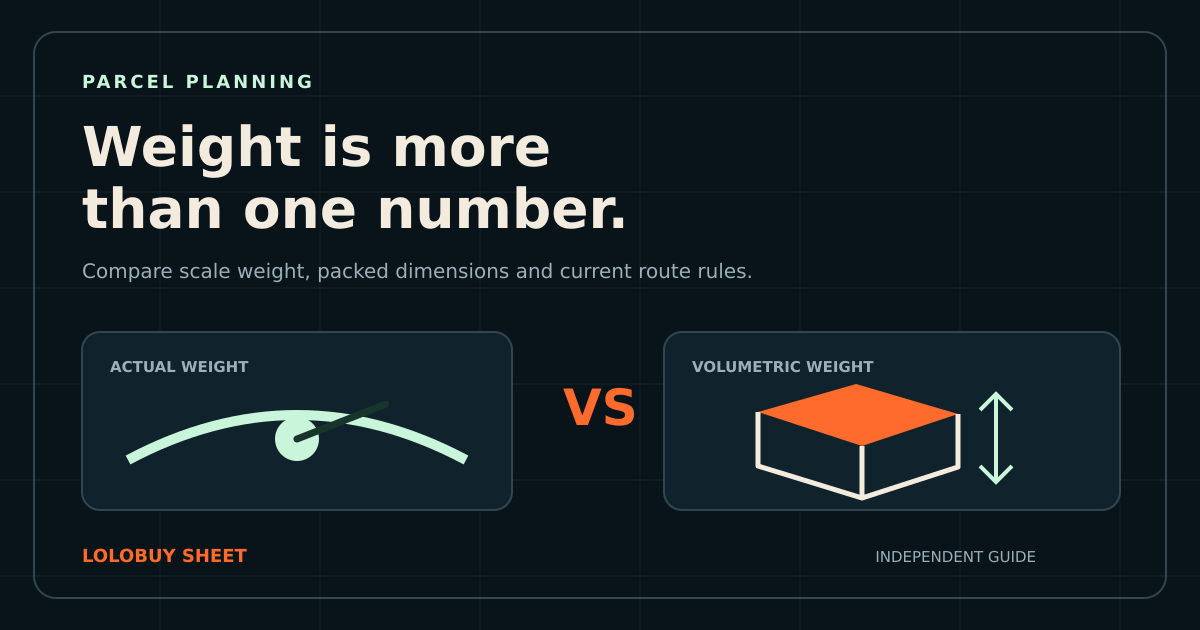
A route may price a parcel using actual weight, dimensional weight or another stated rule. Where it compares actual and dimensional weight, the larger value can determine the charge before rounding. This explains why removing cardboard sometimes produces a meaningful saving and sometimes produces none. The governing input is the final shipping package, not the cardboard weight alone.
DHL describes dimensional weight as a calculation based on package volume and a divisor. Other services and agent routes can use different factors, increments or exceptions. Copy the rule from the route you are considering. Measure length, width and height in the required unit and avoid mixing centimetres with a divisor intended for inches.
Check the first weight step, subsequent increments and any minimum charge if they are shown. A modest reduction may leave the parcel in the same priced band. Conversely, reducing one outer dimension can matter more than removing a small amount of scale weight. Use the revised quotation to establish the saving rather than claiming that every removed shoe box saves a fixed amount.
Compare two complete packing plans
Consider an illustrative parcel weighing 4 kg and measuring 40 × 30 × 30 cm. Its volume is 36,000 cubic centimetres. With an assumed divisor of 5,000, dimensional weight would be 7.2 kg. If a greater-of-actual-and-dimensional rule applies, the starting billable figure is 7.2 kg before any rounding. These numbers are an example, not a LoloBuy quote.
Suppose a protected alternative measures 40 × 30 × 22 cm and weighs 3.8 kg. Under the same assumed divisor, dimensional weight is 5.28 kg. The two calculations show why changing height can matter. They do not establish a cash saving until the route applies its actual increments and price schedule, including any repacking charge.
Now consider a route charging solely by actual weight or a parcel whose actual weight remains above both dimensional results. The same reduction in height may have little effect on the price. Compare both arrangements using the same route and destination, and include the full packing cost. That comparison answers whether the change helps your parcel under current conditions.
Replace useful protection instead of merely deleting it
Inspect the shape and finish of the shoes before choosing protection. A structured upper may be vulnerable to compression, while a delicate surface may be vulnerable to rubbing against another item. Hard accessories should not press directly into the upper. Decide which risks the retail box currently limits and ask how the proposed packing arrangement addresses them.
UPS packaging guidance emphasizes suitable outer packaging, cushioning and limiting movement inside the container. Apply those principles to the actual contents without assuming one material suits every shoe. Ask about separating the pair, retaining necessary support and isolating hard or sharp items. Confirmation of the service matters more than a generic instruction to “pack carefully.”
Do not compress footwear merely because a vacuum or compact-packing option exists for clothing. Shape retention, adhesives, embellishments and materials can differ. If the service cannot explain how the shoes will be protected, keep the safer packing arrangement or request a different plan. The cheapest measurable volume is not always the best delivered outcome.
Check the effect on the whole consolidated parcel
Removing one box does not necessarily shrink the outer parcel if another retained box still determines its dimensions. Look at the complete item arrangement. Two smaller protected pairs might fit differently from a mix of shoes, rigid accessories and clothing. Ask for the final packed dimensions rather than adding individual retail-box volumes together.
Clothing can occupy gaps but should not automatically be treated as adequate protection for every shoe. Keep items clean, separated and identifiable, and consider pressure from the total load. If retaining one valuable box forces a much larger parcel, compare a separate shipment using its full additional freight and packing costs. A split is a new calculation, not a guaranteed saving.
If flattening a box is available, compare its practical value with complete removal. A flattened box still takes space and may not return to its original condition. It also does not provide the same protection while flat. Choose this option only when keeping the packaging itself serves a real purpose and the service can explain what will be delivered.
Approve a specific instruction and keep the result
A useful instruction identifies the order, the action and the required retained contents. For example, specify that one pair’s retail box may be removed after acceptance, while spare laces and labels must remain associated with that pair. Request confirmation of the replacement protection and any fee. Treat this as an instruction template, not a claim about a service automatically available in every account.
Before paying, save the revised packed weight, dimensions, route and quoted total. Compare them with the original plan and decide whether the saving justifies the loss of the retail packaging. If the dimensions are still estimates, keep that uncertainty visible and check what happens when final measurements differ. Do not describe an estimated reduction as a confirmed discount.
On arrival, inspect the shoes and record whether the chosen protection worked for their shape and finish. Keep photographs if an issue needs reporting under the applicable terms. Use the result to refine future packing choices for similar contents, while remembering that a different shoe, parcel arrangement or route can change both the cost and the protection required.
Related buying guides
Continue your research
Open a matched product, then verify the live details
Product availability, options, prices and seller notes can change. Use the catalog to find an item, then make the purchase decision from the current page and your saved order record.